

Assessing Your Available Space
First things first you gotta look at how much actual usable space you have. Don’t just eyeball it — measure your yard and sketch it out.
Most local codes require pools to be a certain distance from property lines fences and your house. I learned this the hard way when my neighbor had to redesign their entire pool because they didn’t account for the setback requirements.
According to experts at Thursday Pools, you need to consider not just the pool itself but also the surrounding deck or patio area. You’ll want at least 3-4 feet of deck space around the pool for safety and functionality.
And don’t forget about access for construction equipment! I’ve seen projects get completely derailed because nobody realized a digger couldn’t fit through the side gate.
But yeah beyond just physical measurements you should think about the shape of your yard too. Weird-shaped yards might need custom pool designs which can get pricey. Sometimes a smaller standard shape makes more sense financially.
Matching Pool Size to Your Lifestyle
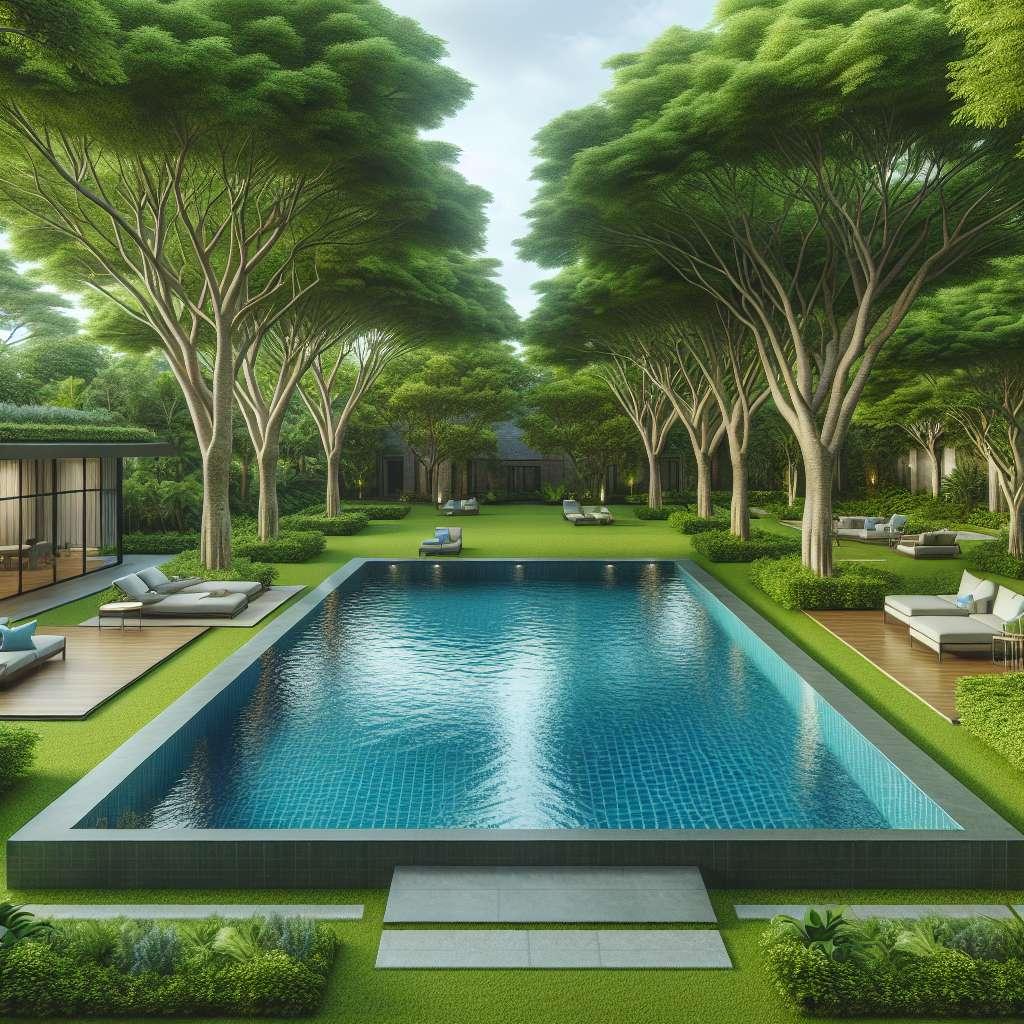
This is where you need to be super honest with yourself about how you’ll actually use the pool. Not how you imagine you’ll use it in some perfect fantasy world.
Do you have kids who want to play volleyball and do cannonballs? Are you primarily looking to swim laps for exercise? Or do you mainly want a gorgeous water feature for entertaining?
Pool Size Recommendations by Use
- For families with active kids and frequent entertaining a medium to large pool (around 16×32 feet or larger) makes sense. My sister went with this size and it’s perfect for their weekend pool parties and their three teenagers.
- If you’re more into fitness, consider a lap pool. These can be narrower (maybe 10-12 feet wide) but should be at least 30-40 feet long to get a decent stroke rhythm going. Some people even opt for swim spas or pools with swim jets if space is tight.
- For smaller households or those wanting a simple lounging pool, something in the 12×24 range might be plenty.
Anyway California Pools & Landscape points out that “cocktail pools” or “spools” (spa/pool hybrids) starting at just 10×20 feet are becoming super popular, especially for empty nesters or urban lots.
Considering Your Budget
Let’s talk money because larger pools obviously cost more — not just to build but to maintain forever. The price difference between a small and large pool can easily be tens of thousands of dollars upfront.
But the ongoing costs are what really add up. More water means more chemicals more heating costs and more time cleaning. If you’re planning to heat your pool, remember that each additional square foot will increase your energy bills.
I had a client who installed this massive 20×40 pool and then almost never heated it because it cost like $500 a month to bring it up to temperature. Not ideal.
Also consider that your pool equipment needs to be sized appropriately for your pool volume. Pumps filters and heaters for larger pools cost more upfront and use more electricity.
Pool Depth Considerations
People often focus so much on length and width they forget about depth! This is super important for both safety and function.
If you’ve got young kids, you might want a larger shallow area — maybe a beach entry or generous tanning ledge. Standard depths usually range from 3-5 feet in the shallow end to 5-8 feet in the deep end.
But here’s something interesting: many pool builders are now recommending uniform depths of around 4-5 feet throughout the entire pool. This maximizes usable swimming space and can be safer if you’re not into diving. Plus it’s more efficient for heating.
I personally prefer pools with at least one deeper section though. When it’s really hot there’s nothing better than being able to fully submerge yourself in cooler water at the bottom of a deeper pool. Makes sense.
Common Pool Sizes and Their Best Uses

- Small pools (10×20 to 12×24 feet): Perfect for lounging, cooling off, or small yards. These work great for couples or small families where intensive swimming isn’t the priority.
- Medium pools (14×28 to 16×32 feet): The most popular size that balances versatility with reasonable costs. These accommodate both play and light lap swimming.
- Large pools (18×36 and up): Ideal for serious entertainers large families or dedicated swimmers. Just remember maintenance time increases substantially.
Industry experts at iopool recommend that you should always leave enough non-pool space in your yard for other activities. A yard that’s 90% pool might look impressive online but becomes impractical for everyday living. You still need space for grilling, dining, playing and just generally hanging out.
Shape Matters Too
The shape of your pool affects both the feel and function of the space. Rectangle pools are classic for a reason — they maximize swimming space and work for lap swimming. But kidney bean, freeform, and L-shaped pools can integrate more naturally into landscape designs.
One thing I’ve noticed is that unusual shapes with lots of curves and angles look amazing but create dead zones where debris collects. If you hate cleaning, stick to simpler shapes. My neighbor has this elaborate freeform pool and spends like an hour after every windstorm getting leaves out of all the nooks and crannies.
Wait — let me rephrase that. The shape itself isn’t necessarily what causes cleaning headaches. It’s more about how the water circulation works with your specific equipment setup. A good pool designer can help ensure proper flow even in complex shapes.
Future-Proofing Your Decision
Think about how your needs might change over time. Kids grow up, entertaining habits evolve, and physical abilities change as we age. I’ve seen too many people build massive pools for their young kids only to have them sitting unused once the teenagers would rather be anywhere but home with their parents.
If you’re planning to stay in your home long-term, consider how adaptable your pool design is. Features like wide steps, handrails, and bench seating can make the pool more accessible as you age.
Also consider resale value. While you should primarily build a pool for your own enjoyment, extremely customized or unusually sized pools might limit your buyer pool (haha pool pun not intended) when you eventually sell. Most realtors will tell you that a well-designed medium-sized pool has the broadest appeal.
Professional Advice Is Worth It

Even if you think you know exactly what you want, consult with a professional pool designer. They bring experience from hundreds of installations and can spot potential issues you’d never consider.
A good designer will evaluate your specific property conditions too. Soil type, water table height, local climate, sun exposure, and existing trees all impact what size and shape works best. These factors can also affect construction costs significantly.
The Perfect Fit
What I’ve found over time is that the best pools aren’t necessarily the biggest or most elaborate — they’re the ones that fit naturally into their surroundings and match the owner’s actual lifestyle. A thoughtfully designed smaller pool often gets more use than an oversized showpiece that’s a pain to maintain.
Anyway, take your time with this decision. You’re gonna be looking at this thing every day for years to come. Measure twice, dig once — or something like that.
Frequently Asked Questions

Is a 16×32 Pool Small?
A 16×32 pool isn’t huge, but it’s definitely not small, either. It’s a nice size for splashing around, having some small gatherings, or just chilling out.
Perfect for a backyard vibe, you know? It’ll work just fine!
Is 14×28 a Good-Sized Pool?
Yeah, a 14×28 pool is a solid size! You’ve got enough room for some fun splashing around, and it’s not too big for maintenance.
It’s great for families or just chilling with friends. Perfect for summer hangouts!
Is a 12×24 Pool a Good Size?
A 12×24 pool is a solid size for backyard fun. It’s big enough for a good splash and some laps, but not too huge.
Perfect for hanging out with friends or cooling off in the summer. Definitely gets my vote!
What Are Standard Pool Sizes?
Standard pool sizes can vary, but you’ll often see them around 10×20 feet for smaller residential ones. Then there are the classic 20×40 feet pools for larger spaces.
It all depends on the yard and what fits, ya know?
About the Author


